Microsoft Fabric
Unify lakehouse, warehouse, and BI delivery on one governed platform
AcquityNode helps organizations modernize analytics on Microsoft Fabric with clearer governance, less duplication, and a delivery model that supports both migration and long-term optimization.
Fabric works best when platform design, governance, and reporting strategy move together
We focus on the technical and operating choices that make Fabric easier to adopt: domain-based storage, shared models, reliable orchestration, and a practical migration sequence.
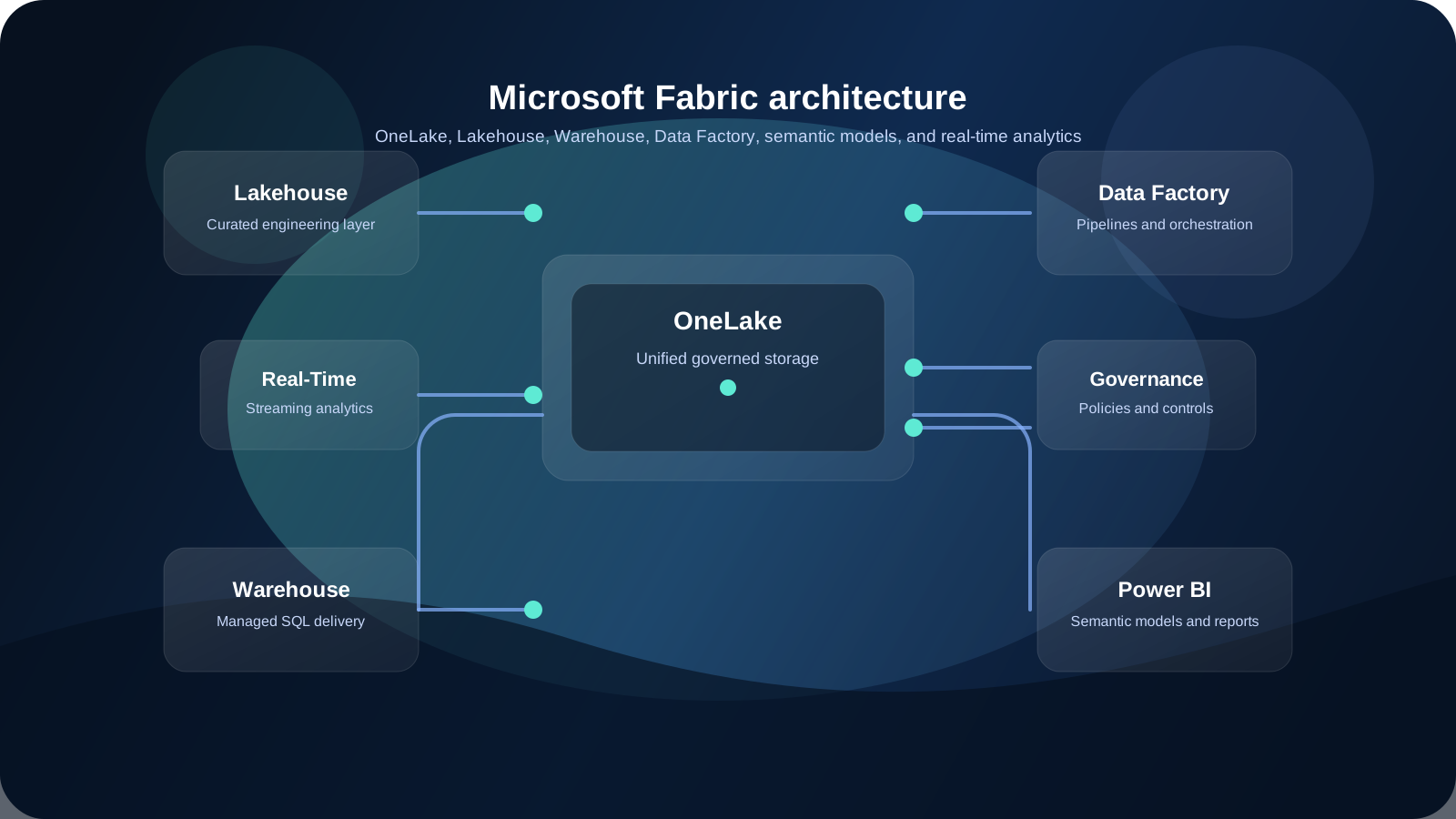
The Fabric capabilities that matter most in a consulting engagement
These are the pieces that usually determine whether Fabric becomes a simplifier or just another analytics layer.
Lakehouse design
Create a governed lakehouse pattern that separates raw, curated, and consumption-ready data for both engineering and analytics teams.
Warehouse delivery
Design SQL warehouse workloads that support business reporting, governed access, and predictable performance.
OneLake architecture
Organize OneLake by domain so data ownership, sensitivity, and reuse are easier to understand and enforce.
Data Factory orchestration
Modernize ingestion and transformation with Fabric pipelines, triggers, and deployment patterns that fit the operating model.
Semantic models
Standardize Power BI semantic models so metrics, measures, and business definitions remain consistent across the enterprise.
Real-Time Analytics
Enable streaming and event-driven analytics for operational scenarios that need low-latency visibility.
A migration sequence that keeps validation and governance in the loop
01
Assess the existing reporting estate, workspace structure, and data dependencies before changing the target design.
02
Define the OneLake, Lakehouse, Warehouse, Data Factory, and semantic model architecture around business domains.
03
Migrate priority pipelines, reports, and datasets in waves with reconciliation and validation checkpoints.
04
Tune performance, reduce duplication, and establish governance controls for steady-state operations.
What a successful Fabric engagement should leave behind
The goal is not just to move workloads. It is to leave behind a cleaner model for reporting ownership, change control, and reuse.
Talk through your Fabric roadmap
If you are evaluating Microsoft Fabric, we can help scope the migration path, governance model, and delivery sequence.
Calendly not configured
Add your Calendly URL to enable direct booking
Set NEXT_PUBLIC_CALENDLY_URL to your booking link, then this section will render the live scheduler.
What to expect
- Project goals, timeline, and stakeholders.
- Current architecture or process blockers.
- Whether Microsoft Fabric, Databricks, Azure, AWS, or AI is the right starting point.
- Next-step options: quick consult, proposal, or capability review.